A is for Aden and Z is for Zanzabar


A is for Aden and Z is for Zanzibar... Now what is between? For the world wide classical era philatelist and stamp collector, a country specific philatelic survey is offered by the blog author, Jim Jackson, with two albums: Big Blue, aka Scott International Part 1 (checklists available), and Deep Blue, aka William Steiner's Stamp Album Web PDF pages. In addition, "Bud" offers commentary and a look at his completely filled Big Blue. Interested? So into the Blues...

Saturday, October 8, 2011

Missing E's-Eastern Silesia

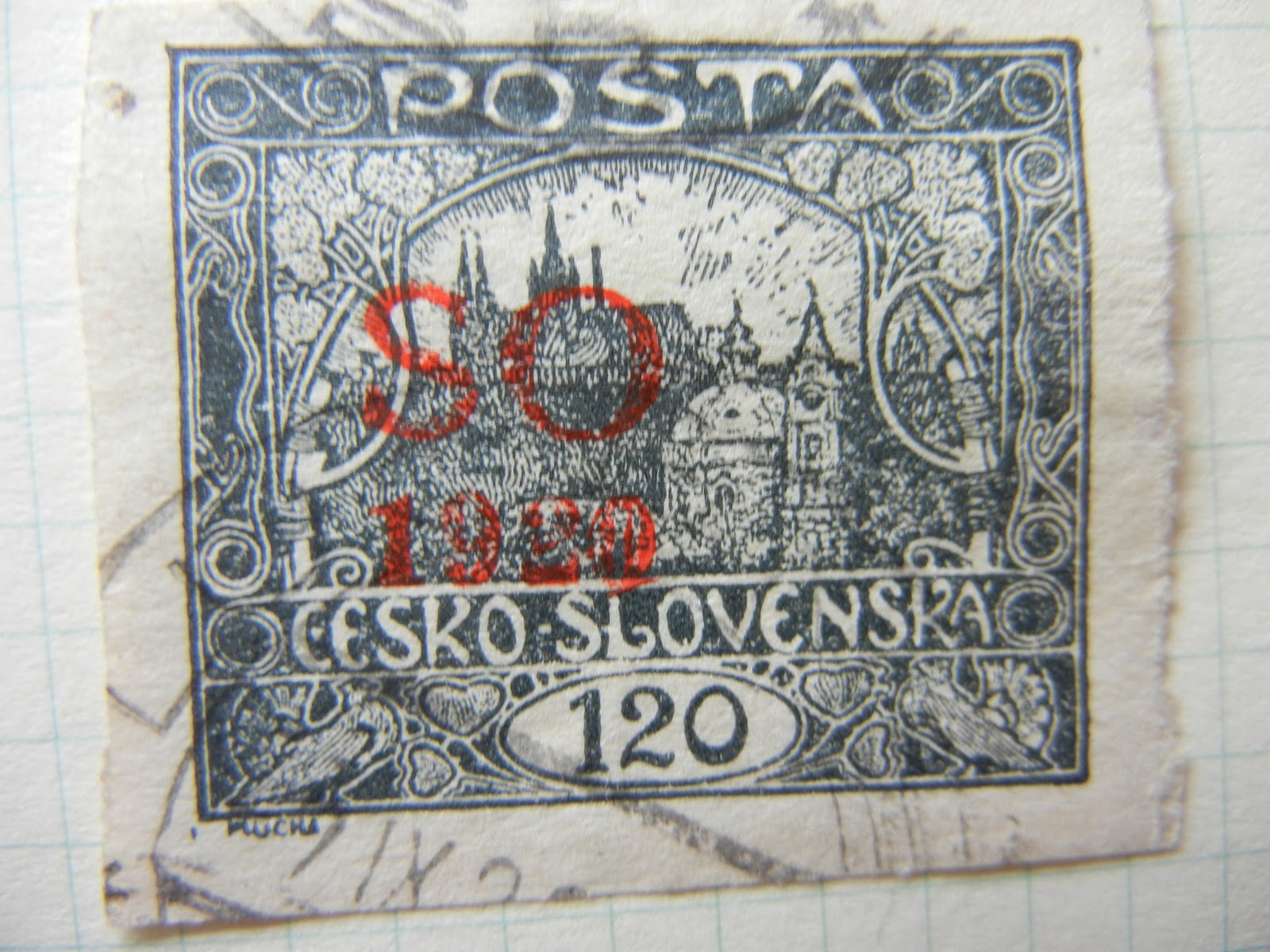
1920 Eastern Silesia plebiscite stamps from Czechoslovakia
S O = Silesie Orientale
Quick History
Eastern Silesia , originally Austrian Silesia, was  desired by both Czechoslovakia and Poland after WWI, as the border between the two nations was not yet firmly set. The Capital was Troppau (Opava), and the population was 680,000 in 1920.

But Czechoslovakia occupied the territory in January, 1919 after negotiations fell through with Poland. Nevertheless, a  plebiscite was planned.  Both nations issued overprinted plebiscite stamps, and they were in use from February to September, 1920. However, a plebiscite was never actually held. Rather, an agreement between the two nations occurred on July 28, 1920, and the territory was divided.

1920 Scott 17 300h green overprint in red
Big Blue Picture
Eastern Silesia's plebiscite issues were dropped in the '69 edition, and did not return in the '97 edition. The '47 and '41 editions, on one page, had 28 stamp spaces, all for Czechoslovakian overprinted stamps. The categories included are regular, newspaper, special delivery, and postage due varieties. As alluded, there were no Polish plebiscite issues represented. The 2011 Scott Classic Specialized catalogue has 51 Czechoslovakian, and 10 Polish major stamp descriptions. Overall coverage by "47 & '41 Big Blue was 46%.

Although 46% coverage is clearly better than none ('69 and '97 editions), there are 7 regular (<$1-$2+) and 4 postage due (<$1) stamps from Czechoslovakia that could additionally be picked up. Since none of the Polish stamps are in Big Blue, all 10 stamps (<$1) would be a nice addition.

Additionals.... (<$1-$2+)
Czechoslovakia
1920 (Czech stamps 1918-20 overprinted "SO 1920" in black,blue,violet, or red)
10,15,16,18,24,29,30,

Postage Due (Czech postage due stamps overprinted "SO 1920" in blue and red)
J7,J8,J9,J10,

Poland
1920 ( Polish stamps of 1919, overprinted "S.O. 1920")
41,42,43,44,45,
46,47,48,49,50,

1920 Scott 46 1k deep green overprinted from Poland
Big Blue Checklist ('47 & '41)
1920 (Czech stamps 1918-20 overprinted "SO 1920" in black,blue,violet, or red)
1 or 22, 2, 3*($20+) or 23, 4($10+) or 25, 26, (<$1 eN)
5, 6 or 27,7,28, 8,(<$1)
9,11,12,13,14($1+), (<$1 eN)
Note: Scott 1-21 Imperf; Scott 22-30 Perf.
*Note 3 or 23 are 5h blue green in Scott; "yellow green" in BB
eN= except noted

Newspaper (Czech newspaper stamps overprinted "SO 1920")
1920 Imperf
P1,P2,P3,P4,P5, (<$1)

Special Delivery
1920  Imperf (Czech special delivery stamps overprinted  "SO 1920" in blue)
E1,E2,(<$1)

Postage Due Imperf (Czech postage due stamps overprinted "SO 1920" in blue and red)
1920 
J1,J2,J3,J4, (<$1)
Two blank spaces: suggest J5,J6,(<$1)

1920 120h gray black with red overprint
Kinds of Blue
The '97 and '69 editions do not have these plebiscite stamps in the album.
The '47 and '41 editions are identical in coverage. The page is found after the Dutch Indies section.

1920 25f olive green from Poland
Big Blue Bottom Line
Nice different colored overprints for a plebiscite that was never held. Clearly, reserving space for the Czechoslovakian and Polish issues is recommended.

Note: Map appears to be in the public domain.

If you would like to comment, please do so!

Thursday, October 6, 2011

Missing E's-Eastern Rumelia

1884 Scott 17 20pa carmine & pale rose "Eastern Rumelia"
 Stamp is in four languages: French,Greek, Bulgarian, and Turkish
Quick History
Eastern Rumelia was an autonomous province of the Ottoman Empire from 1878, created by the Treaty of Berlin in the same year. The Treaty of Berlin also recognized the rights of sovereignty for Romania, Serbia, and Montenegro, along with affirming the autonomy of the Principality of  Bulgaria. The other nations party to the Treaty wished to prevent a Russophile "Greater Bulgaria" from developing. In fact, the Kingdoms of Romania (1881), Serbia (1882), and Montenegro(1910) did occur.

Now Eastern Rumelia (Known as Northern Thrace to many) consisted of 70% ethnic Bulgarians, and 20% Turks and Muslim Bulgarians. The inevitable naturally occurred, and by 1885  Eastern Rumelia was under Bulgarian control, with Bulgarian stamps now used for the territory. This reality was not formally recognized until 1908.

The Capital was Philippopolis (Plovdiv), and the population was 815,000 in 1884.

But, happily for philatelists, Eastern Rumelia had stamp issues between 1880-1885.

Bulgaria divided after the 1878 Treaty of Berlin
Big Blue Picture
Unhappily for Big Blue collectors, Eastern Rumelia was removed from the '69 edition, and did not return in the '97 edition. The '47 and '41 editions had, on one line of one page, seven Ottoman Empire inscribed 1881 & 1884 stamp issue spaces. The 2011 Scott Classic Specialized catalogue has 40 major stamp descriptions. Coverage is 18%.

The initial 1880 issue were stamps of Turkey overprinted R.O. (Roumelie Orientale) in blue. The least expensive stamp is $40+, and the issue does not appear in the '47/'41 Big Blue.

In 1885, the stamps of Eastern Rumelia were overprinted or handstamped with the Bulgarian Lion image. These are considered "South Bulgaria" issues, just prior to Bulgarian stamps being used in 1886. Stamps that are <$20 in cost include Scott 25, 27, and 38. These are interesting stamps, but again are not in the '47/'41 Big Blue.

The stamps that ARE in Big Blue are the Ottoman Empire "Crescent and Turkish Inscriptions of Value" of 1881 and 1884. They look similar to other Turkish stamps, except they have the "Roumelie Orientale" inscription down the left side. In fact, the province is named in four languages and scripts: Turkish (arabic), French (latin), Greek (greek), and Bulgarian (cyrillic). Talk about a language/ethnic crossroads!

The prices for the stamps in Big Blue are inexpensive (<$1-$2+).  That would certainly argue that price was not the reason Eastern Rumelia was removed from the '69 edition. But  other than the stamps I mentioned earlier, there is only one additional (1884 Scott 18(<$1)) stamp I can suggest.

Ethnic and Language Map for "Turkey in Europe"
Big Blue Checklist
1881  "Crescent and Turkish Inscriptions of Value"
10,11,12, ($1+-<$1)
Blank space: suggest 13 ($2+)

1884 "Crescent and Turkish Inscriptions of Value"
15,16,17,(<$1)

1884 Scott 15 5pa lilac & pale lilac "Eastern Rumelia"
Includes Crescent and Turkish Value Inscriptions
Kinds of Blue
The Eastern Rumelia section is not in the '69 and '97 editions.
The '47 and '41 editions are identical in content.

Overview of Southeastern Europe after the 1878 Treaty of Berlin
Big Blue Bottom Line
I'm including a number of maps on this blog because of the interesting crossroads of language and ethnicity represented in and around this territory. That is a good reason enough to find room for these stamps in the '69 and '97 editions. ;-)

Note: Maps appear to be in the public domain.

If you have comments to share, by all means do so.
Thanks!

Monday, October 3, 2011

East Africa & Uganda Protectorates

1912 1c black "George V"
Quick History
"East Africa & Uganda Protectorates" was a combined postal service for the protectorate of British East Africa, and the protectorate of Uganda from 1903 to 1920.

Prior, from 1890 to 1903, British East Africa had their own stamps (See separate blog). British East Africa became the Crown Colony of Kenya (except for a small coastal strip) in 1920; stamps were then inscribed "Kenya and Uganda".

The British Protectorate of Uganda was developed in 1894 from the Buganda Kingdom, part of then British East Africa, and additional territory.  The whole area of the Protectorate of Uganda now defines present day Uganda.

For the "East Africa & Uganda Protectorates" era , the Capital was shifted from Mombassa to Nairobi in 1905. The population was approximately 6,000,000.

1903-07 1a carmine & black "Edward VII"
watermark 2 or 3, chalky or ordinary paper
Big Blue Picture
Big Blue '97, on one page, has 19 stamp spaces for the 1903-1919 British colonial stamp issues of King Edward VII and George V. The 2011 Scott Classic Specialized catalogue has 71 major number stamp descriptions. Coverage by Big Blue is 27%.

The protectorate's issues are the well known Edward VII and George V designs from 1903-1918. The Edward VII issues (1903-07) are a bit tricky, with watermark 2 or 3, and chalky or ordinary paper varieties to detect. Check the watermarks for this issue.

Prices for the issues run from <$1-$10+, but no "Most Expensive" list stamps.

Coverage by Big Blue is good, considering that additionals are generally more expensive. There are four additional King George V stamps  that are only <$1-$1+. I list twelve choices for the 1903-07 Edwards, as they are part of a group that could be picked for two blank spaces. They are priced from $2+-$20+.

Anything out of the ordinary? Yes, a couple of things...
A) The 1903-07 Edward VII 2 1/2p Scott 4($10) "ultramarine" is color specified by BB. That leaves out the  Scott 20($10+) "blue", and  Scott 20a($5+) "blue & ultramarine", even though less expensive.

B) BB asks for George V 10c 43a ($2+) "orange", now a minor number, rather than 43(<$1) "yellow orange", even though less expensive. The '47 Scott catalogue still listed 43 as "orange", so the catalogue was changed at a later date.

C) A cautionary word: The 1912-18 King George V "East Africa and Uganda Proctetorates" colonial watermark 3 issues clearly belong to East Africa and Uganda protectorates stamp pages. But in 1920, it became known as"Kenya and Uganda". Stamps with that inscription were produced in 1922. But prior in 1921, the  King George V "East Africa and Uganda Protectorates" stamps were continued in use in Kenya. This issue can be distinguished by the colonial watermark 4. ! Scott has the watermark 4 issues listed under the Kenya , Uganda, & Tanzania section. Personally, I will probably keep the watermark 4 stamps in the  King George V "East Africa and Uganda Protectorates stamp pages section with a note to avoid confusion.

D) And something fun; an engraving change. ;-) The 1907-08 Edward VII Scott 33 6c carmine also is found as a 33a engraving variety. Both stamps are <$1. I have an image scan on this blog to illustrate the differences. Check your collection; you might have both types!

Additionals.....
1903-07 King Edward VII  ($2+-$20+)
20,20a,
choices not picked in the checklist : (5,6,21,22,23,24,21a,22a,23a,24a)

1912 King George V (<$1-$1+)
46,47,48,61,

1908 1c brown "Edward VII"
"The Baldies"
Big Blue Checklist
1903-07 King Edward VII
1 or 17 or 17a ($2+) 1/2a gray green
2 or 18 or 18a ($1+) 1a carmine & black
3 or 19 or 19a ($2+) 2a violet & dull violet
4*($10+) 2 1/2a ultramarine
Two blank spaces: suggest 1903 Scott 5($20+) or 6($10+); 1904-07 Scott 21($2+),22,23,24,($5+ eN);
1904-07 Scott 21a($2+),22a,23a,24a,($5+ eN)
Note: Spaces consist of 1903 wmk 2 Scott 1-6; 1904-07 wmk 3 chalky paper Scott 17-24;
1904-07 wmk 3 ordinary paper Scott 17a-24a
*Note 4 "ultramarine": Ruled out for color is Scott 20($10+)  "blue", Scott 20a($5+) "blue & ultramarine"
eN=except noted

1907-08  King Edward VII (Type of 1903)
31,32,33* or 33a, 35($2+),36($10+) (<$1 eN)
*Note: compared to 33 6c carmine, 33a has a distinct white line between the lower tablet and the portrait; the word "Protectorate" is in taller letters. See image on blog.

1919 surcharged
62(<$1)

1912 King George V wmk 3
40,41,42,43a*($2+),44,45($1+),60,(<$1)
*Note 43a is 1921 10c "orange", now a minor number, but specified by BB; while 43(<$1) is "yellow orange" in the 2011 Scott.
Note: The colonial wmk 4 George V stamps issued in 1920 are considered (and found in Scott) in the Kenya and Uganda section. See discussion in Big Blue Picture.

1907-08 Scott 33 & 33a 6c carmine "Edward VII"
Right stamp (33a) has a horizontal white line above the lower tablet
The word "protectorate" is taller also
Kinds of Blue
The '97,'69,'47 and '41 editions are all identical in content.

1912-18 10c yellow orange "George V"
SON cancel "Mombasa"
Big Blue Bottom Line


Classic Edward VII (The "Baldies") , and George V British colonial issues.

Note: Maps appear to be in the public domain.

Note: Prices are roughly binned; for actual values consult a Scott catalogue.

If you enjoyed this blog, or have a thought to share, please use the Comment section below. Thanks!

1911 map British East Africa

1898 Map Uganda Protectorate

Thursday, September 29, 2011

Dutch Indies

1902-08 22 1/2c brown and olive green & 25c violet
Queen Wilhelmina
Quick History


The Dutch Indies ( Netherlands Indies, Dutch East Indies) was a Dutch colony consisting of Java, Sumatra, Lesser Sundas, Madura, Celebes, Moluccas, Western New Guinea, and two thirds of Borneo. After the Japanese occupation and WWII, and then the Independence movement, modern day Indonesia was formed.

The Dutch East India Companies possessions were nationalized in 1800 as the Dutch East Indies. Products from the Dutch Indies that made the Netherlands a colonial power included nutmeg, cloves, cinnamon, and the introduced coffee, tea, cacao, tobacco, rubber and sugar.  The Capital was Batavia (Jakarta), and the population was 60 million in 1930, 240,000 of them European.

Stamps were issued in 1864.

1902 1/2c on 2c yellow brown & 2 1/2c on 3c violet
Surcharged on 1883-90 Numeral of Value stamps
Big Blue Picture
Big Blue '97, on eight pages, has 174 stamp spaces for regular, semipostal, air post, and postage due categories. The 2011 Scott Classic Specialized catalogue has 361 major stamp descriptions. Coverage by Big Blue is 48%.

The Dutch Indies stamps themselves have a classic elegant design with the three Numeral issues, and the many variations of the Queen Wihelmina issues. There are quite a few overprints/surcharges which I find fascinating. The prices are quite inexpensive, with the exception the 1883-90 Numeral Scott 21 5c green valued north of $25. But no "Most Expensive" candidates for the list.

What about BB's coverage? I'll let you be the judge. ;-)

Using an affordability comb of <$5, I found an additional 121 stamps that are not found in BB. Let's take a closer look...
1) Issue is in BB, but leaves the series early..
1870-88 King William III( 4 stamps), 1908 overprinted "Butten Bezeit"(12 stamps), 1908 overprinted "JAVA" (13 stamps), 1933-37 Rice Field Scene/Queen Wihelmina (8 stamps), and 1913-39 Postage due (5 stamps).

2) Issue not in BB
1938-40 Rice Field Scene/Queen Wihelmina (16 stamps), 1915-32 semipostals (13 stamps), 1928 air post (4 stamps), 1882-88, and  1892-95 postage dues (12 stamps)

3) Stamp category left out of Big Blue
Official stamps: 1911 issue year (22 stamps)

Carving out some room for these extra stamps would appear to be a good idea. ;-) One would want to especially save space for the Official stamps, as they are commonly  found in collections.

Curve balls in the Dutch Indies section? Well, yes...

The 1933-37 Rice Field Scene/Queen Wihelmina issue (Scott 164-188) can be problematic. First and foremost, water soluble ink was used for this issue, and if the stamp is immersed in water, the design can disappear! I have a pic on this blog of that! Other stamps/issues for the Dutch Indies that use water soluble ink include the 1933 Scott 16 12 1/2c deep orange "Prince William I", and the entire 1938-40 Scott 200-225 Rice Field Scene/Queen Wihelmina re-issue!

Now BB does not give room for the 1938-40 Rice Field Scene/Queen Wihelmina re-issue, but it "looks" identical in appearance to the 1933-37 issue. How to tell the difference? The 1938-40 issue is watermarked (202-Circles). Just turn over the stamp, and one will usually see little circle watermarks. The 1933-37 issue is unwatermarked. Perforations are also different (mostly) between the issues. The 1933-37 Scott 164-182 have a horizontal 11 1/2 perforations; while the 1938-40 Scott 200-216 have a horizontal 12 1/2 perforations.

A challenge is offered by the Dutch Indies 1882-88 postage dues. Although this issue is not in BB, five stamps are under $1 in value. There are four ( I,II,III,IV) different engraving types to examine! I scan the stamp with high detail (1200 dpi), and then "examine" the enlarged stamp on the computer monitor. Makes it fun! I include a pic of a Type III stamp on the blog.

Additionals..... ( <$1-$2+)
Regular (60 stamps)
1870-88 King William III (Perf)
12,13,14,15,
Note: BB leaves series too early

1906 Queen Wilhelmina
61

1908 (1901-08 stamps overprinted "Butten Bezeit")
(horizontal)
65,68,69,
(vertical)
71,72,73,74,75,76,77,78,79,
Note: BB leaves series too early

(1908) (1901-08 stamps overprinted "JAVA")
(horizontal)
83,85,86,87,
(vertical)
89,90,91,92,93,94,95,96,97,
Note: BB leaves series too early

1912-32
114A,124,135,136,

1923 Queen Wihelmina
154,155,

1933-37 Rice Field Scene/Queen Wihelmina  (unwmk)
180,181,182,183,184,185,186,188,
Note:  Scott 180-182 Perf 11 1/2 X 12 1/2, Scott 183-188 Perf 12 1/2
Note: water soluble ink: Do not immerse in water.

1938-40 Rice Field Scene/Queen Wihelmina  (wmk 202-circles)
200,201,202,203,205,206,207,208,210,211,212,213,215,216,218,221,
Note: Virtually identical in appearance to series above (1933-37), but not in BB by date!
Note: Scott 200-216 Perf 12 1/2 X 12; Scott 218-221 Perf 12 1/2
Note: water soluble ink: Do not immerse in water.
Note: Differentiate by watermark and/or perf.

Semi-postal (13 stamps)
1915-32
B1,B2,B4,B5,B6,B8,B9,B10,B12,B13,B14,B15,
Note: AS BB begins with the 1933 issue, none of these semipostal issues are covered.

1940
B48

Air Post (7 stamps)
1928
C1,C2,C3,C4,
Note: Issue not in BB

1930-32
(choices not taken in checklist)
C11,C12,C17,

1933
C18

Postage Due (19 stamps)
1882-88
J7,J8,J9,J10,J11,J12,J13,J14,J15,
Note: Issue not in BB
Note: Found in four (I,II,III,IV) types! See Scott. I illustrate Type III on the blog.

1892-95
J16,J17,J18,
Note: Found in three (I,II,III,) types. See Scott.
Note: Issue not in BB

1913-39 (Value in color of stamp)
J34,J35,J37,J38,J39,
Note: BB leaves series too early

1937-40
J40,J42,

Official stamps (22 stamps)
Note: No Official stamps in BB!

1911 (regular issues of 1883-1909 overprinted "DIENST.")
O1,O2,O3,O4,O5,O6,O7,O8,O9,O10,O11,O12,O13,O14,O15,O16,O17,O19,

1911 ( regular issues of 1892-1894 overprinted with a "D" surrounded by a black circle)
O21,O23,O24,O26,

1933-37 Rice field scene: Printed with water soluble Ink
Can you spot the stamps that were immersed in water?
Big Blue Checklist
1870-88 King William III (Perf)
3($2+) or 4, 5($2+),8($2+),9(<$1),10,11,($1+ eN)
Note: There are minor number "small holes" perforation varieties at higher catalogue value.
eN= except noted

1883-90 Numeral of Value
17,18*,19,20,21*($20+),22,(<$1 eN)
*Note 18 2c "red brown" in BB is "brown" in Scott
*Note 21 5c green is highest price stamp in BB for the Dutch Indies.

1892-94 Queen Wilhelmina
23(<$1),24*($5+),25,26,27,28,29,($1+ eN)
*Note 24 actually is a '97 issue

1889-1900 Queen Wilhelmina ( Netherlands stamp issue, surcharged)
31,32,33,34,35,36,(<$1)

1902 Numeral of value (New design: solid background behind number)
38,39,40,41*,42($1+),44,(<$1 eN)
*Note 41 2 1/2c "blue green" in BB is "green" in Scott

1902-08 surcharged
46,47,(<$1)

(1902-08) Queen Wilhelmina
48,49,50,51,52($1+),(<$1 eN)

1902-08 (Continued)
53,54,55,56,57,(<$1)

1905 surcharged "10 cent"
58($1+)
Note: A diagonal surcharge, not horizontal as printed in BB

1906 Queen Wilhelmina
59(<$1)

1908-09 ("Type of 1901" -actually 1902 Numeral)
43($5+),45(<$1)

1908 (1901-08 stamps overprinted "Butten Bezeit")
Three blank spaces(horizontal): suggest 63,64,66,(<$1)
Blank space (vertical): suggest 70(<$1)

(1908) (1901-08 stamps overprinted "JAVA")
Three blank spaces(horizontal): suggest 81,82,84,(<$1)
Blank space(vertical): suggest 88(<$1)

(1912-23) Re-designed Numeral (white background behind number)
101,102,(<$1)

1912-23 Re-designed Numeral (continued)
103,106,105,107,109,112,(<$1)
113,115*,116,(<$1)
*Note 115 7 1/2c "drab" in BB is "bister" in Scott.

(1912-23) Queen Wihelmina
117,118,119,121,(<$1)
122,123,125,126,127,128,130,(<$1)

1912-14 Queen Wihelmina
131,132,133,134*,(<$1)
*Note 134 1g "gold brown" in BB is "brown" in Scott

1918 surcharged
138,139,(<$1)

1921-31 surcharged
144,145,146,158,(<$1)

1921-22 surcharged
147,148,149*,(<$1)
*Note 149 60c on 1g "gold brown" in BB is 'brown" in Scott

1917 surcharged
137(<$1)

1923 Queen Wihelmina
151,152,153,(<$1)

1933 Prince William I
163(<$1)
Note: First printing was in water soluble ink, and will disappear when put in water.

1928-30 (Numeral type of 1912-14)
104,108,110,111($2+),114*,(<$1 eN)
(Queen Wihelmina)
120,129,(<$1)
*Note 114 is 5c chalky blue; beware of similar 114A ultra, a '40 issue.

1933-37 Rice Field Scene (unwmk, Perf 11 1/2 X 12 1/2)
164,165,166,167,168,169,(<$1)
170,171,172,(<$1)
( Queen Wihelmina)
173,175,176,(<$1)
177,178,(<$1)
Note: Do not immerse this series in water! Water soluble ink, and the design will disappear!
Note: Virtually identical 1938-40 Scott 200-225 issue that is NOT in BB! The 1938-40 series is watermarked (201-circles), and is Perf 12 1/2 X 12 for Scott 200-216; Perf 12 1/2 for Scott 218-225.
Differentiate by watermark and /or Perf! The 1938-40 issue is also with water soluble ink!

1934 (air post stamps surcharged)
189,190,191,(<$1)

1938 Queen Wihelmina
196,197,198,199,(<$1)

Semi-postal
1933 Woman and Lotus
B16,B17($1+),B18,B19($1+),(<$1 eN)

1934
B20(<$1)

1935
B21($1+),B22($2+),B23,B24($2+),(<$1 eN)

1937
B30($1+),B31(<$1)

1936
B25,B26($1+),B27($1+),B28,B29($1+),(<$1 eN)

1937-39
B37,B38,B39,B40,B41,(<$1)
B42,B32,B33,B34,B35,B36($1+),B44,(<$1 eN)
B43,B45,B46,B47,(<$1)

1938
B36A,B36B,(<$1)

Air Post
1928
C6,C7,C8,C9,(<$1)
Blank space: suggest C10(<$1)

1931
C14(<$1),C15($2+)
Two blank spaces: Suggest C16($2+) and second space? C11or C12 or C13 or C17,*!
*Note: Three stamp series (C14-16), so all used up!
Suggest any horizontal air mail stamp for the space: 1930-32 surcharge C11,C12,(<$1); 1931 C13($10+); 1932 surcharge C17(<$1)

Postage Due
1913-39 (Value in color of stamp)
J25,J26,J27,J28, (three blank spaces),J33,(<$1)
Three blank spaces: suggest J29,J30,J31,J32,(<$1)
Note: color in BB for this issue is "light red" Also the labeled color in the 1947 Scott catalogue.
But the 2011 Scott has color "salmon". !
Note: There is a minor number '41 issue with thick white paper, Numerals slightly larger at a higher catalogue value.

1882-88 Postage Due 5c: Comes in four engraving types
32 loops; "T" of "Betalen" is slightly to left of a loop
Top branch of first "E" of "Betalen" shorter than lower branch
Therefore Type III   ;-)
Update Note: This stamp is lilac, not carmine - therefore Surinam, not Dutch Indies.
In addition, the cancel is from Surinam - see comment section.
Kinds of Blue
The '97 and '69 editions are identical. The '47 and '41 editions are identical.

The '47 and '41 editions have two more (blank) spaces available for the 1870-88 issue.
Choose two: 12($2+),13(<$1),14($2+),15($1+)

The '97 and '69 editions have an extra space for the 1928 Air post issue.
C10(<$1)

The '97 and '69 editions have three extra spaces for the 1931 air post issue.
C15($2+),C16($2+), and C11/C12/C13/C17 choice(<$1-$10+)

Red surcharged 1921-22  40c on 50c green "Queen Wilhelmina"
Many overprinted/surcharged Dutch Indies stamps exist
Big Blue Bottom Line.
Very enjoyable stamp issues. IMHO, there should be better coverage by Big Blue of these nice stamps.

Note: Map appears to be in the public domain.

If you enjoyed this blog, or have something to say, I would like to hear from you in the Comment section!

Sunday, September 25, 2011

Dominican Republic

1914 Scott 1867-189 "Juan Pablo Duarte"
Quick History

Note: Update Blog Post: 1902 "Center Inverted" Issue

The Dominican republic shares the island La Hispaniola with Haiti, and is located in the Caribbean Sea. The Capital is Santo Domingo, and the population was 1,800,000 in 1942. Christopher Columbus reached the island in 1492, and Santo Domingo became the first European settlement in the Americas. The Dominican Republic has seen three centuries of Spanish rule, brief French rule, brief Haitian rule, "Independence" in 1821, another "Dominican War of Independence" in 1844, brief Spanish rule, U.S. occupation 1916-1924, the dictatorship of Trujillo Molina until 1961, a 1965 civil war, and finally a move toward a representative democracy. Stamps were first issued in 1865.

1900 1/4c dark blue "Map of Hispaniola"
Map stamp land grab: compare with borders today
Big Blue Picture
Big Blue '97, on 12 spread out pages, has 182 regular, 20 air post, 1 special delivery, 4 postage due, 1 insured letter, 10 official, and 4 postal tax stamps, for a total of  222 stamp spaces.
The 2011 Scott Classic Specialized catalogue has 474 major stamp descriptions. Coverage is 47%.

Big Blue's coverage is fairly good, but I did find 95 affordable (<$1-$2+) stamps that could be added by the BB collector. Since BB '97 spreads the BOB issues out to six pages, adding more Air Post (14 stamps), Postage Due ( 5 stamps), Insured Letter (7 stamps), and Official (14 stamps) issues might be a good use of space.

Comments...
A) Dominican Republic stamps in BB are quite inexpensive; the most I can recall for a required stamp was $7+.

B) The various "Coat of Arms" issues (1859-1927), comprising 59 stamps in BB, at times differ only slightly in design between issues. So pay attention. ;-)

C) The overprinted by year "Coat of Arms" issues (1915,1916,1917,1919,1920,1921) are an interesting lot. (Parenthetically, this was also the time (1916-1924) that the U.S. was occupying the Country.) Unfortunately, BB only gives possible room to the 1915,1920, and 1921 overprinted year issues. So one will need to set up a separate space for the others.

D) Surcharged issues are given short shrift for space. The 1883 and 1904-06  surcharged issues can provide 20 additional stamps for the BB collector.

E) Would you like an inverted stamp in your collection, but the 24c Jenny is a bit much? How about the 1902  Scott 144a-146a, 148a-150a "400th anniversary of Santo Domingo" stamp issue? The 1c,2c,.5c,12c,20c, & 50c all exist inverted at a cost of $2+! ;-)

F) Pay attention to history. Note the 1900 Map of Hispaniola, and the rather generous borders on the  Dominican Republic stamp?  The reality is the borders were ill defined until 1935.

More importantly, note the cult for the President and Dictator Rafael Trujillo.  The 1930s issues are replete  with self aggrandizement. The stamps are large and gaudy. He renamed the oldest city in the Americas, Santo Domingo, for himself : Ciudad Trujillo.

Additionals..... (<$1-$2+)
1880-81 "Coat of Arms"
41,42,43,44,50,51,52,

1883 surcharged (series not in BB)
54,57,58,59,60,71,74,75,76,

1899-1900 "Columbus mausoleum" fund raising issue
109

1900 Map of Hispaniola
116,117,118,119,

1904-06 surcharged and/or overprinted issues
153,154,157,158,161,163,165,167,169,170,171,

1914 "Juan Pablo Duarte"
191,192,193,

1915 (Types of 1911-13 redrawn; overprinted "1915" in red)
207


1920-27* (Type of 1915 overprinted various dates)
*Note: BB's date requirements leave out the 1916,1917, and 1919 overprinted stamps!

OUT
209("1916") 1/2c violet & black
213("1917") 1/2c red lilac & black
210("1916") 1c green & black
215("1917") 2c olive green & black
219("1919") 2c olive green & black
216("1917") 5c magenta & black

1928
245,246,

1931
264,265,

1932 red cross ( not in BB)
265B,265C,265D,

1933
273,274,

1935-36
317


Air post stamps
1928-34
(Map of Hispaniola)
C3,C4,C5,C7,C8,C9,
(1928-34)
C15,C16,C17,

1935-37
C28,C29,C31,

1938-40
C38,C39,

Special Delivery
1920
E1

Postage due
1913-22
J9,J10,J11,J12,J13,

Insured Letter
1935-40
G1,G2,G3,G4,G5,G6,G7,
Also G9,G10,G11,G12 issued 1941-45, but in the Scott Classic catalogue.


Official stamps
1902
O4

1909-12 (not in BB)
O5,O6,O7,O8,O9,

1928
O13,O14,

1937-40
O19,O20,O21,

1937-40
O19,O20,O21,
(O21A-O25 are '41 issues)

Postal Tax Air Post stamps
RAC5,RAC8,


Overprinted 1915-21 "Coat of Arms" issues
Big Blue has room for the '15,'20, & '21 year stamps
Big Blue Checklist
1879 "Coat of Arms"
32 or 33, 34 or 35, ($1+)

1880-81 "Coat of Arms"
36 or 45, 37 or 46, 38 or 47, 39 or 48, 40 or 49, (<$1)
Note: 1880 Scott 36-40 rouletted; 1881 Scott 45-49 network covering stamp

1880-91 "Coat of Arms" (Actually 1885-91)
88,89,90,91,92,(<$1)
Note: This series and the next are quite similar in appearance.

1885 "Coat of Arms" (Actually 1895-97)
96 or a, 97 or a, 98 or a, 99 or a($1+), (<$1 eN)
Note: 1895 Scott 96-99 horizontal perf 12 1/2; 1897 Scott 96a-99a horizontal perf 14.
eN=except noted

1899-1900 "Columbus mausoleum" fund raising issue
103,100($2+),102,"blank space", 104($1+),(<$1 eN)
Note: For the one horizontal Blank space above,  suggest 110 or 110A

1900 Map of Hispaniola
111,112,113,114,115,(<$1)

1901 "Coat of Arms"
120,123,126,129,132,(<$1)
Blank space: suggest 135

1902 400th anniv. of Santo Domingo
144,145,146,147,148,(<$1)

1902(continued)
149,150,(<$1)
Note: Scott 144a-150a ($2+) are minor number varieties with center inverted . I would like some. ;-)

1905  "Coat of Arms" (Type of 1901)
121,124,127,130($1+),(<$1 eN)
Blank space: suggest 133($1+)

1906-10  "Coat of Arms" (Type of 1901)
122 or 172, 125 or 173, 128 or 174, 131 or 175, 134 or 176, (<$1)
Blank space: suggest 137($2+)
Note: Scott 172-176 wmk 116 crosses and circles

1911-13 "Coat of Arms" new design
178,179,180,181,182,183($5+),(<$1 eN)
Blank space: suggest 184 or 185 ($2+)

1914 "Juan Pablo Duarte"
186,187,188,189,190,(<$1)

1927
238

1915 (Types of 1911-13 redrawn; overprinted "1915" in red)
200,201,202 or 203, 204,205,206,(<$1)

1920-27* (Type of 1915 overprinted various dates)
*Note: BB's date requirements leave out the 1916,1917, and 1919 overprinted stamps!
IN
220("1920") 1/2 c lilac rose & black (<$1)
221("1920")  or 227("1921") 1c yellow green & black (<$1)
222("1920") or 228("1921") 2c olive green & black  (<$1)
223("1920") 5c deep rose & black (<$1)
224("1920") 10c blue & black (<$1)

OUT
209("1916") 1/2c violet & black (<$1)
213("1917") 1/2c red lilac & black (<$1)
210("1916") 1c green & black (<$1)
215("1917") 2c olive green & black (<$1)
219("1919") 2c olive green & black (<$1)
216("1917") 5c magenta & black (<$1)

1920-27 (actually 1922) (1915 type first redrawing without date overprint)
230,231,232,(<$1)
Note: These stamps, on the same line as the overprinted date "1920"-"1921" stamp spaces above, belong here. Do not put the overprinted stamps in these spaces.

1922-27 (second redrawing without date overprint)
233,234,235,236($2+) or 236A($1+),(<$1 eN)
Note: pay attention to differences in first and second redrawing

1927
239,240,(<$1)

1928
241,242,243,244,(<$1)

1929
249,250,251,252,253,(<$1)

1930
254,255,256,257,258($1+),(<$1 eN)

1931
260,261,262,263,(<$1)

1933
266,267,268,269,270,(<$1)
271,272,286,287,288,<$1)

1933 (actually 1932)
278,279,(<$1)

1934
289,290,291,(<$1)

1934-35
292,293,294,(<$1)
295,296,297($1+),298($1+),(<$1 eN)

1936
304,305,(<$1)

1937
329(<$1)

1935-36
299,300,301,302,(<$1)
306,307,308,(<$1)
309($1+),310,311,312,(<$1 eN)
313,314,315,316,(<$1)
Blank space: suggest 318 or 320 ($5+)

1937
323,324,325($1+)(<$1 eN)

1940
365(<$1)

1937
326,327,328($2+),(<$1 eN)

1938 (actually 1937)
330,331,(<$1)

1938
332,333,334,335,(<$1)
336,337,338,339,(<$1)

1938(continued)
340,341,(<$1)

1939
346,347,348,(<$1)

1939 (continued)
349,350,(<$1)

1940
356,357,(<$1)

1939
342,343,344,(<$1)

1939 (continued)
345(<$1)

1940
362,363,(<$1)

1940
351,352,353,354,(<$1)

(1940)
358,359,360,361,(<$1)

Air post stamps
1928-34
C18(<$1)
C1 or C2 or C6 ($1+-<$1) Map of Hispaniola
C19(<$1)
C10 or C11 or C12 (<$1-$2+)
C13(<$1)
C14(<$2+)

1935-37
C20,C21,C22,C23,(<$1)
C24($1+),C25,C26,C27($1+),(<$1 eN)

1938-40
C32,C34,C33,(<$1)
C35,C36,C37,(<$1)

Special Delivery
1937
E2($2+) or E3($1+)
Note: BB '97 provides this one stamp space its own page. ;-)

Postage Due
1901-13
J1 or J5,J2 or J6,J3,J4 or J8($2+), (<$1 eN)
Note: all "olive gray", 1901 Scott J1-J4; 1909 Scott J5-J8 wmk 116 crosses and circles.
Note: 1913 & 1922 Scott J9-J13 "ineligible", as "olive green" color.

Insured Letter
1940
G8(<$1)
Note: lonely, all by itself on BB's '97 page, even though  Scott has seven others quite inexpensive. ;-)

Official stamps
1902 (unwmk)
O1,O2,O3, (<$1)
Note: not in BB, and only differs subtly in design, is 1909-12 Scott O5-O9 wmk 116

1928
O10,O11,O12,(<$1)

1937-40
O15,O16.(<$1)
Two blank spaces: suggest O17 & O18*(<$1)
*Note: O18 is '39 issue, and slightly different design.

Postal Tax stamp
1930
RA1 or RA5,RA2 or RA6,(<$1)
RA3 or RA7,RA4 or RA8,(<$1)
Note RA1-RA4 perf 12: RA5-RA8 Imperf

1880 Scott 36 1c green rouletted
Kinds of Blue
The '97 and '69 are identical in content except the '97 spreads out to 5 pages for BOB what the '69 has on one page.

The '47 and '41 are identical in content.

The '69 and '97 have these stamp spaces available, which are not found in the '47 and '41 editions.
1880-91 "Coat of Arms" (Actually 1885-91)
92(<$1) 20c dark brown

1899-1900 "Columbus mausoleum" fund raising issue
Blank space(horizontal): suggest 110 or 110A(<$1)

The'47 and '41 have these stamp spaces available, which are not found in the '69 and '97 editions.
1900 Map of Hispanola
116(<$1) 10c orange

Air Post
1935-37
C29 ($1+) 50c dark brown

1940
C38(<$1) 25c bright red lilac & red violet

1937 3c violet "President Trujillo and Obelisk"
One year anniversary for "Ciudad Trujillo" (Santo Domingo)
Big Blue Bottom Line
Inexpensive, interesting and frightening (Trujillo).

Note: Map appears to be in the public domain.

Note: Prices are roughly binned; check the Scott catalogue for actual prices.

If you enjoyed this post, or something to share, please add a comment below!

Wednesday, September 21, 2011

Dominica

1909 Scott 40 3p violet/yellow/chalky paper
"Roseau, Capital of Dominica"
The Roseaus had 5 separate issues between 1903-1921
Found with ordinary/chalky paper, and three different watermarks!
Quick History


Dominica was "discovered" on a Sunday in 1493 by Christopher Columbus; hence the name. The island is found between Guadeloupe and Martinique in the Lesser Antilles region of the Caribbean Sea. A British colony since 1805, a Crown Colony since 1896, this mountainous, volcanic, and poor country has an undeveloped natural beauty.  The Capital is  Roseau, and the population was 53,000 in 1942. Finally,The Commonwealth of Dominica became independent in 1978.

1888 Scott 21 2 1/2p ultramarine
The Queen Victoria issues can be found with Colonial watermark 1 or 2
Big Blue Picture
Big Blue '97 on three pages has 48 stamp spaces. The 2011 Scott Classic Specialized catalogue, beginning with the Queen Victoria issue of 1874, has 112 major stamp descriptions. Coverage by Big Blue is 43%.

The Dominican issues are quite attractive, with a large number of pictorials. Big Blue generally has a nice representative collection. I did find 5 Victorians, 8 Roseau pictorials, and 2 more pictorials that are inexpensive (<$5), and could be added by the Big Blue collector.

All peaches and cream? Well no... ;-)
A) Big Blue leaves out all ( save one-Scott 40) of the Chalky Paper Roseau issues. About 10 of them are reasonably priced. BB has spaces for the 1903 Roseau issue, the 1908-09 Roseau issue, and the 1921 Roseau issue: Total 9 stamp spaces. But BB leaves out (by dates and color specifications) the 1906-07  wmk 1 C.P. issue, and the 1907-20 wmk 3 C.P. issue. You will need to pay attention to the paper: ordinary vs chalky.

A1) Continuing with the Roseaus... The "1903" issue can be particularly tricky. The 1/2 p (illust) argues for the 1903 Scott 25($2+) 1/2p "gray green". (wmk 1). Now, there IS a 1906-07 Scott 25a($10+) chalky paper stamp, and a 1907 Scott 35($2+)(wmk3) chalky paper stamp available. If you expanded the dates to "1903-1907", then you could include the other stamps. Your choice. BTW, BB does offer a space for a 1/2p "green" for the 1908-22 issues. Put the right color in the correct space.
The same dilemma goes for the blank space; where 1903 Scott 26($1+) 1p carmine & black is the logical choice.  There are 1906-07 26a($5+) and a 1907 36(<$1) (wmk 3) chalky paper varieties available if you change the dates.

B) Get out the watermarking tray! All four colonial watermarks are present. In particular, the Roseau issue comes in wmk 1,wmk 3, and wmk 4. Then the Victorians come in wmk 1 & wmk 2. The later issues come in wmk 4, so not an identification problem there. Generally, the Colonial watermarks are fairly easy to identify. About half of the time, simply turning over the stamp on a dark surface will be enough to identify the watermark. I enjoy the activity and find it rewarding; hope you do too!

Additionals....(<$5)
1877-79 Queen Victoria (wmk 1)
5,7,

1883-88 Queen Victoria (wmk 2)
16,19,20,

1903 Roseau, Capital of Dominica (wmk 1)
27,29,

1907-20 Roseau, Capital of Dominica (wmk 3) Chalky Paper
35,36,43,44,

1921 Roseau, Capital of Dominica (wmk 4)
57,61,

1923-33 Seal of the Colony & George V
80,

1938 King George VI & Pictorials
103,

1923-33 Scott 76 6p red violet & black
"Seal of the Colony & George V"
Big Blue Checklist
1883-88 Queen Victoria (wmk 2)
17,18*,21,($2+)
Blank space: suggest 22($2+)
*Note 18 is 1p violet for this illustrated space. 1874 Scott 1($50+) & 1877-79 Scott 5($2+) 1p violet ( wmk 1) is ruled out for dates. Scott 19($2+) 1p deep carmine is a '89 issue, and is R/O for date.

1903 Roseau, Capital of Dominica (wmk 1)
25*($2+) 1/2p gray green
Blank space: suggest 26* ($1+) 1p carmine & black
*Note 25 :R/O? for dates is 1906-07 25a($10+) (Chalky Paper), and 1907-20 35($2+)(C.P.)(wmk3)
Your choice!
*Note 26: R/O? for dates is 1906-07 26a($5+)(C.P.), and 1907-20 36(<$1) (C.P.) (wmk 3)
Your choice!

1908-22 Roseau, Capital of Dominica (Types of 1903-07)
1/2p green: 50 or 56 ($2+)
1p scarlet: 51*(<$1)
1 1/2p orange: 58($2+)
2p gray: 52 or 59 ($2+)
2 1/2p ultramarine: 53($5+) or 60($2+)
(1908-22 next row)
3p violet/yellow: 40*($2+)
1 1/2p on 2 1/2p orange: 55($2+)
 Note: stamp spaces include 1908-09 Scott 50-53 (wmk 3), and 1921 Scott 56-60 (wmk 4)
*Note 51: Scott 57 1p rose red ($2+) R/O for color.
*Note 40: is chalky paper, wmk 3. Also regular paper minor number varieties exist.

1923-33 Seal of the Colony & George V (wmk 4) Chalky Paper
65,66,(<$1-$2+)

1923-33 Seal of the Colony & George V (continued)
67($1+),68,69,70,71($2+)(<$1 eN)
72,73,74($1+),75,($2+ eN)
Blank space: suggest 76 or 77($2+)

1935 Silver Jubilee
90.91,92,93,(<$1-$2+)

1937 Coronation
94,95,96,(<$1)

1938 King George VI & Pictorials
97,98,99,(<$1)
100,101($2+),102,104,(<$1 eN)
106($1+),108*($5+),109($5+)
*Note 108 is "vermilion & black" in BB, while "scarlet vermilion & black" in Scott.

1940 King George VI
111(<$1)

War Tax stamps
1916-18
MR1,MR2($2+),MR3,(<$1 eN)
MR4($2+),MR5(<$1)

1938 5sh dark brown & blue
"Layou River" 
Kinds of Blue
The '97,'69,'47, and '41 editions are identical in content.

1918 MR2 1/2p green 
"War Tax" overprint
Big Blue Bottom Line
Quite attractive Pictorials in the British Colonial design for this more obscure than most Caribbean island.

Pay attention to the  "Roseau, Capital of Dominica" design Pictorials, as Big Blue leaves out about 10 reasonably priced 1906-07 (wmk 1) and 1907-1920 (wmk 3) Chalky Paper varieties. You may find them in collections.

Speaking of watermarks, Dominica has all four of the Colonial watermarks represented. Might be a good time to sharpen one's abilities. Generally speaking, I find the colonial watermarks fairly easy to differentiate. Often, just turning over the stamp on a dark surface is all that is required!

Note: Map appears to be in the public domain.

Note: Prices are roughly binned; for specific pricing, consult a Scott catalogue

Note: If you have comments, I would love to hear from you!

Sunday, September 18, 2011

Diego Suarez


1890 15c black "Symbolical of Union of France and Madagascar"
This expensive issue is not in Big Blue
Quick History
Diego Suarez is located on the northern tip of Madagascar, and has a natural bay. France desired the harbor for a coaling station for steamboats. The territory, later known as Antsiranana, was ceded to France after the invasion in 1883 of Madagascar (First Franco-Hova War). The French also acquired the island of Nossi-Be as a protectorate.
From 1885-1996, Diego Suarez (named after Diogo Soares, a Portuguese explorer) was a French protectorate and colony. The administration of the colony was given to Madagascar in 1896. Stamps were issued from 1890-1894.

La Guerre Madagascar
Big Blue Picture
Big Blue '97, on two lines of one page, has eight stamps spaces for the French "Navigation & Commerce" issues of 1892 & 1894. The 2011 Scott Classic Specialized catalogue has 63 major stamp descriptions for regular and postage due issues beginning in 1890. Coverage by Big Blue is 13%.

Big Blue begins with the 1892 issue, but there are 24 stamps issued prior to that date.  Some issues (The 1890 Symbolical of Union of France and Madagascar issue-see blog image) appear interesting, but expensive ($90+-$200+). Others are overprinted or surcharged, but the least expensive is $10+. The 1891-92 thirteen postage due stamps are no less than $30+. The 1892 and 1894 issues , which are represented in Big Blue, do have six additional stamps in the $5+ category, but none less. Long story short: I see no additional affordable stamps(<$5). ;-)

Big Blue Checklist
1892 "Navigation & Commerce" , Inscribed "Diego-Suarez & Dependances"
25,26,27,28($5+),($2+ eN)
eN=except noted

1894 "Navigation & Commerce" , Inscribed "Diego-Suarez"
38($1+),39,40,41,($2+ eN)

1892 Scott 25 1c black/blue "Navigation And Commerce"
Impint: "Diego-Suarez et Dependences"
Kinds of Blue
The '97,'69,'47 and '41 editions are all identical.
For the '69, Diego Suarez is found after Cuba.
For the '41 & '47, Diego Suarez is found after Cyprus.

1887 Diego Suarez & Harbor
Big Blue Bottom Line
I didn't know where Diego Suarez was located. Did you? ;-)

Note: Map, images and stamp image appear to be in the public domain.

Note: Prices are roughly binned; for actual prices, consult a Scott catalogue.

Comments welcomed!

Wednesday, September 14, 2011

Denmark

1875-79 20o rose & gray & 25o gray & green, & 1902-04 50o brown & violet
These issues can vary by normal or inverted frame, watermarks, and perforations
Quick History


Denmark is a Scandinavian country with close language ties to Sweden and Norway. A constitutional monarchy since 1849, the Kingdom of Denmark consists of Denmark, Greenland, and the Faroe Islands. The country is on the Jutland peninsula, and borders the Baltic and North Sea, while Germany borders to the south. The population was 4,000,000 in 1942, and the Capital is Copenhagen.

Denmark's stamp issues are quite popular in North America, as there are many Danish descendants here. The nicely engraved and designed classic era stamps are an attraction too.

Danish stamp history: The first two issues in 1851 had the burelage printed from a copper plate, giving a slight relief to the network. Subsequent classical issues had the burelage typographed. "Burelage" are fine lines printed over the paper background to prevent counterfeiting, or to  prevent reuse of the stamp.

1864-68 Scott 13 4s red 
"Royal Emblems"
Big Blue Picture
Big Blue '97, on nine pages, has 206 stamp spaces. The 2011 Scott Specialized Classic catalogue has 399 major stamp descriptions. Coverage by Big Blue is 52%.

Big Blue has a surfeit of pages for Denmark. The last five pages is "filled" with 8 semi-postal, 6 air post, 4 postage due, 4 official, and 8 newspaper spaces for a total of 30 stamp spaces. I found 40 more stamps for the last five pages; and a total of 76 additional stamps (<$5) that could be added by the BB collector. Lots of room, so no problem there. ;-)

But we have more interesting discussion items for Denmark then that.

A) Some countries can fill stamp pages in BB without crossing the "most expensive threshold.  Not Denmark. ;-)
Here is the Denmark list...

1851 Royal Emblems Imperf
2 4rs brown ($40+)

1853-57 (dotting in spandrels) Imperf
3 2s blue ($60+)

1864-65 Royal Emblems Perf 13
11 2s blue ($30+)

1870-79 Numerals

32* or 32a  25o gray & green ($40+)
33* or 33b  50o brown & violet ($30+)
34* or 34b  100o gray & orange ($60+)

1905-06 King Christian IX
68 50o dull violet ($100)


Air Post
1925-26 airplane & plowman
C3 25o scarlet (($40+)!

There are several others that come close to the $35 inclusion threshold.

B) There are eleven spaces in BB for the 1870-79 Numeral stamps. For each of these stamp spaces, one can find a normal or inverted frame candidate. ( I have an image of both frame types elsewhere on the blog.) Then there are a number of color variations for these stamps, adding to the possibilities. But we have seen this before as BB often telescopes several choices into one space: fair enough. What is disconcerting is by setting the "date" parameters to 1870-79, BB excludes the 1895-1901 and the 1902-04 Numeral re-issues. A number of these stamps are less expensive than the choices in BB. Many BB albums will have a healthy dose of 1895-1901, and 1902-04 stamps in these spaces for the good reason that they are more common and less expensive.

So a choice for BB collectors. ;-) Adhere strictly to the date requirements, fill the spaces with the (generally) more expensive 1870-79 issue, and put any "orphan" 1895-1901 and 1902-04 issues on supplemental pages.  OR change BB's dates to "1870-1901" or "1870-1904", and welcome the later issues into Big Blue.

If you do decide to keep the 1895-1901 and 1902-1904 out of BB's pages, there is a simple way to identify them. They all are perforation 13, while the 1870-79 issue is 14X 13 1/2. Now, if you elect to keep them in, then one will need to look at watermarks to separate the 1895-1901 issue (wmk 112- rounder Crown) from the 1902-04 issue (wmk 113-more narrow Crown).

In the Checklist, I list all the 1895-01 and 1902-04 stamps for you, so you can decide what to do with them.

C) There is a similar problem for the 1882-85 "Arms" issue. The subsequent 1895-01 and 1902-04 issues are left out of BB. If you wish to include these inexpensive choices, change the inclusive dates in Big Blue to 1882-1901, or 1882-1904.

D) Among the sea of thirty stamp spaces headed by the date "1913-22", and marked in the first space by a King Christian X illustration, are two puzzling stamp description spaces. The space just to the right of the King Christian stamp cut is for a "5o dark brown". Then down the row is a "10o green". I filled most of the 30 spaces with my copies of the various King Christian X denomination stamps, but I could not find stamps for those two spaces. I opened the catalogue the next day, and my eyes wandered up the page where ..Mon Dieu!, there were the stamp descriptions in the  re-engraved Numerals stamp section; Scott 89 & 94! I wonder how many BB collectors have been baffled by this? Big Blue gives no clue.

E) The Caravel's (Ship design) were issued in 1927, and then again in 1933-34 (Type I), and 1933-40 (Type II). The 1927 issue is straightforward, but the re-engraved varieties have two types. Type II has one column of squares between the sail and left frame edge, while Type I has two columns. Big Blue mostly favors the 1933-40 Type II issues, giving all ten of them a possible space choice, while only giving one firm choice to the seven Type I issue stamps. As the engraving differences are clear at a glance, one might want to find supplementary room for the Type I's. Illustrated on this blog are the engraving differences.

Finally, the illustrated stamp cut in the first space for the 1933-40 Caravel's is bizarre; a wildly out of place 1875-79 Scott 26 4o slate & blue! I first became aware of this printing error from Bob Skinner's "Filling Spaces" blog. One can imagine the confusion this illustration cut has caused since at least the '69 edition. Ignore, and put in a 238A 15o deep red, the first stamp of the redrawn Type II issues.

Additionals... ( 76 stamps) (<$1 -$2+)

Regular issues (36)
1870-79 Numerals
Remember, for the 1870-79 Numerals, there are Inverted Frame/color variations that can be added by the BB collector. See BB Checklist.

1895-1901 Numerals
Entire issue (Scott 41,42,43,44,45,46,47,48,49,50,51,52,) is R/O by BB for dates, unless one changes BB's date restrictions. Even with expansion, Scott 43,45,48 are left out.

1902-04 Numerals
Entire issue (6 stamps) is R/O by BB for dates, unless one changes BB's date restrictions. Otherwise 43a,45a,48a can be added.

1913-34
85,90,91,93,95,105,109,117,119, 176,182,183,184,185,187,189,190,232,233,234,235,

Semi-postal (1)
1939 Queen Alexandrine
B9

Late Fee stamps (5)
1923
I1

1926-31
I2,I3,

1934
L4,L5,
Comment: The Late Fee stamps are not in BB, and are very inexpensive.


Postage Due (21)
1921 overprinted
J1,J2,J3,J6,J7,

1921-30 typographed
J10,J12,J16,J18,J19,J20,J21,

1921-30 engraved
J25,J26,J27,J30,J32,J33,J34,J37,J38,

Official stamps (9)
O7,O8,O9B,O15,O16,O17,O18,O19,O22,

Newspaper(4)
P8,P13,P19,P20

Four varieties of the 4o slate & blue
Inverted frame, normal fame 1895-1901; Inverted frame, normal frame 1875-79
Compare the left upper frame vertical arabesque branching
The horizontal perforations are 13 for the 1895-1901; while 14 for the 1875-79
Big Blue Checklist
1851 Royal Emblems Imperf
2 4rs brown ($40+)

1853-57 (dotting in spandrels) Imperf
3 2s blue ($60+)
4 4s brown ($10+)

1858-62 (wavy lines in spandrels) Imperf
7 4s yellow brown ($5+)
Note: 1863 Scott 9($10+) excluded by BB for date

1864-65 Royal Emblems Perf 13
11 2s blue ($30+)
13 4s red ($5+)

1870-79  Numerals wmk 112 (rounder crown) Perf 14 X 13 1/2
16 2s gray & ultra ($20+)
25* or 25c 3o "blue & gray" in BB, gray blue & gray in Scott ($10+)
18 4s gray & carmine ($10+)
26* or 26e 4o slate & blue (<$1)
28* or 28c  8o slate & carmine (<$1)
29* or 29c  12o slate & dull lake ($2+)

(next row)
30* or 30b  16o slate & brown ($2+)
31 or 31b 20o rose & gray ($30+)
32* or 32a  25o gray & green ($40+)
33* or 33b  50o brown & violet ($30+)
34* or 34b  100o gray & orange ($60+)
Note: minor numbers listed above are inverted frame varieties
Note: minor numbers exist also for different colors
*Note: 1895-1901 Scott Perf 13, wmk 112 issue stamps, and  1902-04 Perf 13, wmk 113 (wider crown) issue stamps are ruled out by BB for dates! Specifically...

41 3o blue & gray ($5+); 1895-01 issue, wmk 112, perf 13
41c 3o blue& gray ($2+); 1902-04 issue wmk 113, perf 13
42 4o slate & blue (<$1); 1895-01 issue, wmk 112, perf 13
42b 4o slate & blue ($10+); 1902-04 issue, wmk 113, perf 13
44 8o slate & carmine (<$1); 1895-01 issue; wmk 112, perf 13
44d 8o slate & carmine ($400+)!; 1902-04 issue, wmk 113, perf 13
46 12o slate & dull lake ($2+); 1895-01 issue,wmk 112, perf 13
(next row)
47 16o slate & brown ($2+); 1895-01 issue; wmk 112, perf 13
50 25o gray & green ($10+); 1895-01 issue; wmk 112,perf 13
50b 25o gray & green ($2+); 1902-04 issue; wmk 113, perf 13
51 50o brown & violet ($20+); 1895-01 issue,wmk 112,perf 13
51b 50o brown & violet ($20+); 1902-04 issue, wmk 113, perf 13
52* 100o slate & orange ($30+); 1895-01 issue,wmk 112, perf 13
52b* 100o slate & orange ($10+); 1902-04 issue,wmk 113,perf 13
*Note on 52 & 52b: not an exact color match; BB wants gray & orange
Note: The 1895-01 issue stamps almost all exist as minor number inverted frame varieties for about the same price. The 1902-04 inverted frame varieties catalogue for a much higher valuation.

Comment: If you wish to include these stamps in BB's spaces, change the inclusion dates in BB to 1870-1901, or 1870-1904. Because of cost, may be a good idea!

1882-85 "Arms" wmk 112 (rounder crown) Perf 14 X 13 1/2
35*($100+) or 38($2+) 5o green
39 10o carmine ($2+)
37($70+) or 40 ($5+) 20o blue
*Note 35: space is illustrated in BB with small numerals in corners which would argue for 35, a $100 stamp. But the date range is 1882-85; so 38, a larger corner numeral variety, and a $2+ stamp, is allowed.
Note: 1882 Scott 35,37 are small numerals in corners; while 1884-88 Scott 38-40 are large numerals.
Note: Again BB leaves out re-issues. Specifically...
1895-01 wmk 112 perf 13
43 5o green (<$1)
45 10o rose carmine ((<$1)
48 20o blue ($5+)

1902-04 wnk 113 perf 13
43a 5o green (<$1)
45a 10o rose carmine (<$1)
48a 20o blue ($2+)
Comment: If you wish to include these inexpensive choices, change the inclusive dates in Big Blue to 1882-1901, or 1882-1904. Be aware that the 10o rose carmine for these later issues does not match BB's "carmine" specification

1901-02 "Arms"
53 1o orange (<$1)
54 15o lilac (<$1)
49 24o brown ($5+)

1904 surcharged
55($2+),56($5+)

1905-17 large numerals
57* 1o orange(<$1)
58 or 86 2o carmine (<$1)
59 or 87 3o gray (<$1)
60 or 88 (Illust): 4o dull blue or blue ((<$1)
61* 5o deep green (<$1)
62 10o deep rose (<$1)
63 15o lilac ($1+)
64 20o dark blue(<$1)
*Note 57: 85 1o(<$1) is deep orange, so R/O by color
*Note 61: 1930 Scott 90(<$1) light green R/O for date & color

1905-06 King Christian IX
70,65 or 71,66($2+),67($5+),68*($100+),69($10+),(<$1 eN)
*Note: 68 50o dull violet ($100) !
eN=except noted

1907-12 King Frederik VIII
72,73,74*,75($1+),76*($5+),77($5+),78($5+) (<$1 eN)
*Note 74 is "bright blue" in BB, indigo in Scott
*Note 76 is "orange" in BB, deep orange in Scott

1913-22 King Christian X (and two large Numerals*)
97,89*,98($2+),99($5+),100,94*,101($5+), 102,(<$1 eN)
103,104,108,106,107($5+),110**($20+),111($2+),112($1+),(<$1 eN)
114($5+),116($2+),118($1+),120($2+),121($1+),122,123a***($10+),124,(<$1 eN)
*Note 89 & 94 are 5o dark brown & 10o green large Numeral stamps respectively in a sea of Christian V stamps! I wonder how many BB collectors have been baffled by this? Big Blue gives no clue. In fact, the Christian V "1o" illustration cut is just to the left of the "5o dark brown" description. So now you know. ;-)
**Note 110 is 27o vermilion & black ($20+)
***Note 123a is 60o brown & ultra($10+), rather than 123 60o brown & blue ($2+). BB specifies the now minor number color.

1913-22 King Christian X
125,126($20+),127,132*($1+),128,133($5+)($2+ eN)
*Note: 132 Illust of 1k: put yellow brown 1k there; 128 is 1k brown & blue.

1920-21 Roskilde Cathedral
158($2+),160($10+)

1920-26 surcharge
162,161,163($2+),181,($1+ eN)

1920-21 castles
156,159,157,(<$1)

1924 Christian X,Christian IV, etc
164,168,172,165,169,173,166,170,($5+)

1924 (continued)
174,167,171,175,($5+)

1926
178,179,180($1+),(<$1 eN)

1927-33 Caravel (solid background)
192,193($2+),194,195,196($1+),197,(<$1 eN)

1930 Christian X
210,211,(<$1-$2+)

1930 Christian X (continued)
212,213,214,215($5+),216($1+),217($1+),218($2+),219($1+),(<$1 eN)

1935 Hans Christian Andersen "fairy tales"
246,247($1+),248,249,250($1+),251,(<$1 eN)

1936 Church Reformation anniversary
252,253($1+),254,255,256($1+),(<$1 eN)

1937-38
262,264,265,266($1+),259,261($2+),(<$1 eN)
258,260,(<$1)

1933-40 large Numerals (redrawn)
220,221,222,223,224,224C,225,(<$1)
226A,226,227,227A,228,229,230*,(<$1)
*Note 230 10c violet in Scott is "purple" in BB

1933-40 (1927 Caravel redrawn) Type I & Type II
238A*,238B,238C,238D,238E,233*($20+),(<$1 eN)
238F or 236,238G,238H or 237,238I or 238,238J,(<$1)
Note: 1933-34 Scott 236-8 is Type I: two columns of squares between sail & left frame line.
1933-40 Scott 238A-238J is Type II:  one column of squares.
*Note: BB's biggest printing blunder so far: a 1875-79 Scott 26 4o slate & blue illust cut placed at the beginning of the redrawn 1933-40 caravel stamp spaces. Ignore, and put in a 238A 15o deep red, the first stamp of the redrawn Type II issues.
*Note 233 is Type I 25o blue for $25+; only firm choice for Type I in BB.

1934-41 King Christian X
239,240,240A*,241,242,243($2+),(<$1 eN)
*Note 240A is a '41 issue!

1937-40 overprinted
257,263,($1+-$2+)

(stamps of 1937-40 surcharged)
244,267,268,245,269,270,271,272,(<$1)

Semi-postal stamps
1929 Crown & Staff of Aesculapius
B3($2+),B4($5+),B5 25o deep blue ($20+)

1937 H. Hannssen, statesman, Fund
B6,B7($2+),B8($2+),(<$1 eN)

1939 Queen Alexandrine
B10,B11,(<$1)

Air Post
1925-26 airplane & plowman
C1 10o yellow green ($20+)
C3 25o scarlet (($40+)!

1934 towers of Copenhagen
C6(<$1),C7,C8,($2+ eN)
Blank space: suggest C9($2+)

Postage Due
1921 typographed
J9,J11,J15,J17,(<$1)

Official stamps
1902-20
4o illustration"(4o "blue"*) : O13,($2+) or O18($30+)
Three blank spaces*: suggest O11($1+),O12($1+),O14(<$1)
*Note blank spaces: For blank spaces, these stamps are eligible because of BB date criteria: 1899-02 O9A;1902-06 O11.O12,O13,O14,O15; 1914-23 O16,O17,O18,O19,O21,O23,O24. Here, the 1914-23 issues are limited to year 1920 issue or earlier.
*Note 4o illustration: 1899 O9B($2+) 4o blue ruled out for date; 1875 O7($2+) 4o greenish blue ruled out for date.


Newspaper stamps
1907-17
P1($2+) or P11($2+)
P2($10+) or P12($10+)
P3($1+)
P14($2+)
(next row)
P4($2+) or P15($2+)
P5($1+) or P16($2+)
P17($2+)
P6($1+) or P18($150+)!
Note: 1907 Scott P1-P6 wmk 113, Perf 13 (narrow crown); 1914-15 Scott P11-P18 wmk 114( multiple crosses), perf 14X14 1/2

In a sea of 1913-22 "King Christian X" (28 stamps)
There is room for a 5o dark brown & a 10o green wavy line Numerals
Don't be afraid to put them there!
Kinds of Blue
The '97 and '69 editions are identical in content, except the 5 page layout in the '69 has been stretched to 9 pages in the '97.

Huge difference, though, between the '97/'69 and '47/'41 editions.
Missing from the '47/'41 editions are the 1933-40 definitives/overprints; 40 stamps & one whole page!
Specifically, the ...

1933-40 large Numerals (redrawn)
220,221,222,223,224,224C,225,(<$1)
226A,226,227,227A,228,229,230,(<$1)
(Only exception: 229 10o light brown space is on the preceding page of the '47/'41)


1933-40 (1927 Caravel redrawn) Type I & Type II
238A,238B,238C,238D,238E,238F,(<$1)
236,238G,238H or 237,238I or 238,238J,(<$1)


1934-41 King Christian X
239,240,240A,241,242,243($2+),(<$1 eN)


1937-40 overprinted
257,263,($1+-$2+)


(stamps of 1937-40 surcharged)
244,267,268,245,269,270,271,272,(<$1)

Fortunately, these large omissions were rectified by the '69 edition.


The Caravel's: 1933-40, 1933-34, & 1927 issues
Type II: one column of squares between sail and left frame; Type I: two columns
The 1927 issue has no columns (solid color)
Big Blue Bottom Line
Definitely a challenge, especially the 1870-1904 Numerals with their perforation, watermark,color,and frame variations. You know what? I like it. ;-)

Note: stamp prices are loosely binned. For specific valuations, consult a Scott catelogue

Note: If you enjoyed this blog, or can add to the discussion, or have constructive criticism, please post your comments below. Thanks!